

The Cacay Tree: Indigenous History and Botany of Caryodendron orinocense
Deep within the Orinoco and Amazon river basins of Colombia, Venezuela, and Ecuador grows a majestic canopy species tightly interwoven with the region's biodiversity and ancestral heritage: the Cacay tree (Caryodendron orinocense). Belonging to the Euphorbiaceae family, this native tree has served as a vital ecological anchor and a multi-purpose resource for Amazonian indigenous communities for centuries, long before it caught the attention of modern agroforestry.

Botanical Overview and Habitat
The Cacay is a fast-growing, evergreen tree capable of reaching heights of 30 to 40 meters in its native wild habitat. It thrives in tropical rainforests and transitional forest zones, typically at altitudes between sea level and 2,300 meters, preferring well-drained, fertile soils near riverbanks.
Key Botanical Characteristics:
-
Canopy and Foliage: It features a dense, rounded crown with large, bright green, elliptical leaves that provide significant shade, helping to regulate the microclimate of the forest floor.
-
Root System: The tree develops a deep and aggressive root system. This makes it structurally resilient against tropical storms and highly effective at stabilizing riverbanks, preventing soil erosion in high-rainfall zones.
-
Reproduction: Cacay is a dioecious species, meaning individual trees are either male or female. Natural pollination relies heavily on native forest insects, requiring a biodiverse ecosystem to successfully propagate.
The Fruit and the Nut
The Cacay tree begins to bear fruit around its fifth to seventh year, with yields increasing significantly as the tree matures.
Structure of the Fruit:
The fruit is a woody, indehiscent capsule, roughly the size of a lemon or a small apple, measuring about 4 to 6 centimeters in diameter. It has a tough, fibrous green outer rind that shifts to a brownish-grey hue as it ripens and falls to the forest floor.
Inside the hard outer shell, the fruit is divided into three distinct internal chambers. Each chamber houses a single, oval-shaped seed—the Cacay nut—wrapped in a thin, papery brown skin (testa). The kernel inside is dense, off-white, and naturally rich in lipids and proteins.

Ethnobotanical History: Indigenous Uses and Cultural Connection
For generations, Amazonian indigenous groups, such as the Sikuani and Guayabero communities of the Orinoco plains, have maintained a profound relationship with Caryodendron orinocense. Rather than cultivating it in monocultures, native populations traditionally protected wild Cacay stands, incorporating them into ancestral agroforestry systems known as chagras.
Locals utilized every element of the tree to sustain daily life:
1. Dietary Staple
The Cacay nut was traditionally gathered from the forest floor during the peak harvest season (typically between January and April). Indigenous families roasted or toasted the kernels over open fires to neutralize raw enzymes, resulting in a highly nutritious, crispy food source. The flavor profile closely resembles a cross between a walnut and a peanut. Due to its high protein and fat content, it served as an essential energy source during long hunting excursions or periods of scarce game.
2. Traditional Medicine and Skincare
Long before lab analyses quantified its biochemical properties, native populations recognized the therapeutic value of the oil pressed from the seeds.
-
Topical Healing: The raw oil was extracted using rudimentary continuous pressing methods or by boiling crushed nuts and skimming the fats from the surface. This oil was applied to soothe skin irritations, treat burns, and accelerate the healing of wounds.
-
Respiratory Care: In traditional Amazonian medicine, a preparation derived from the nuts was sometimes consumed to alleviate respiratory ailments, persistent coughs, and throat inflammation.
3. Illumination and Fuel
The high oil content of the Cacay nut served a vital practical purpose in remote jungle settings. Indigenous peoples discovered that by stringing multiple dry kernels onto a thin stick or vine, they could create a rustic, slow-burning torch. These "nut candles" provided reliable illumination inside communal dwellings (malocas) without producing excessive, suffocating smoke. Additionally, the dense, woody outer shells of the fruit were collected and used as a high-calorie fuel source for cooking fires.
Ecological Significance
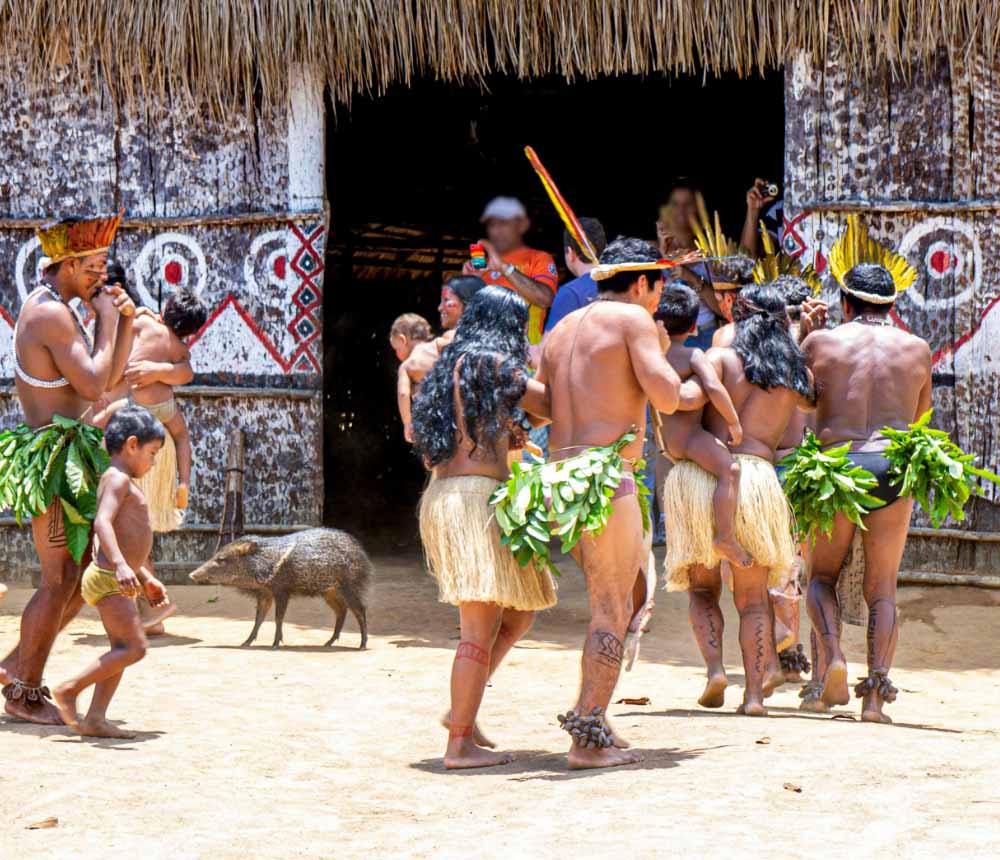
In its native habitat, the Cacay tree functions as a critical component of the trophic web. The falling fruit serves as a major food source for terrestrial rainforest fauna, including rodents like the agouti (Dasyprocta), wild peccaries, and various foraging birds, which in turn help disperse the seeds throughout the basin. Furthermore, its continuous leaf-shedding provides a steady supply of organic matter, enriching the nutrient-poor Amazonian topsoil and driving the forest's natural rejuvenation cycle.

References
-
Pérez, J. M., & Extremera, W. (2018). Ethnobotany of the Orinoco Basin: Traditional Knowledge and Plant Uses among the Sikuani. Journal of Ethnobiology and Ethnomedicine, 14(2), 112–125.
-
Food and Agriculture Organization (FAO). (2021). Non-Wood Forest Products of Latin America: Caryodendron orinocense Karst. Rome: FAO Forestry Department.
-
Gutiérrez, L. N., & Trujillo, M. H. (2023). Morphological and Ecological Characterization of the Cacay Tree (Caryodendron orinocense) in the Colombian Amazon. Revista de Biología Tropical, 71(1), e4932.